
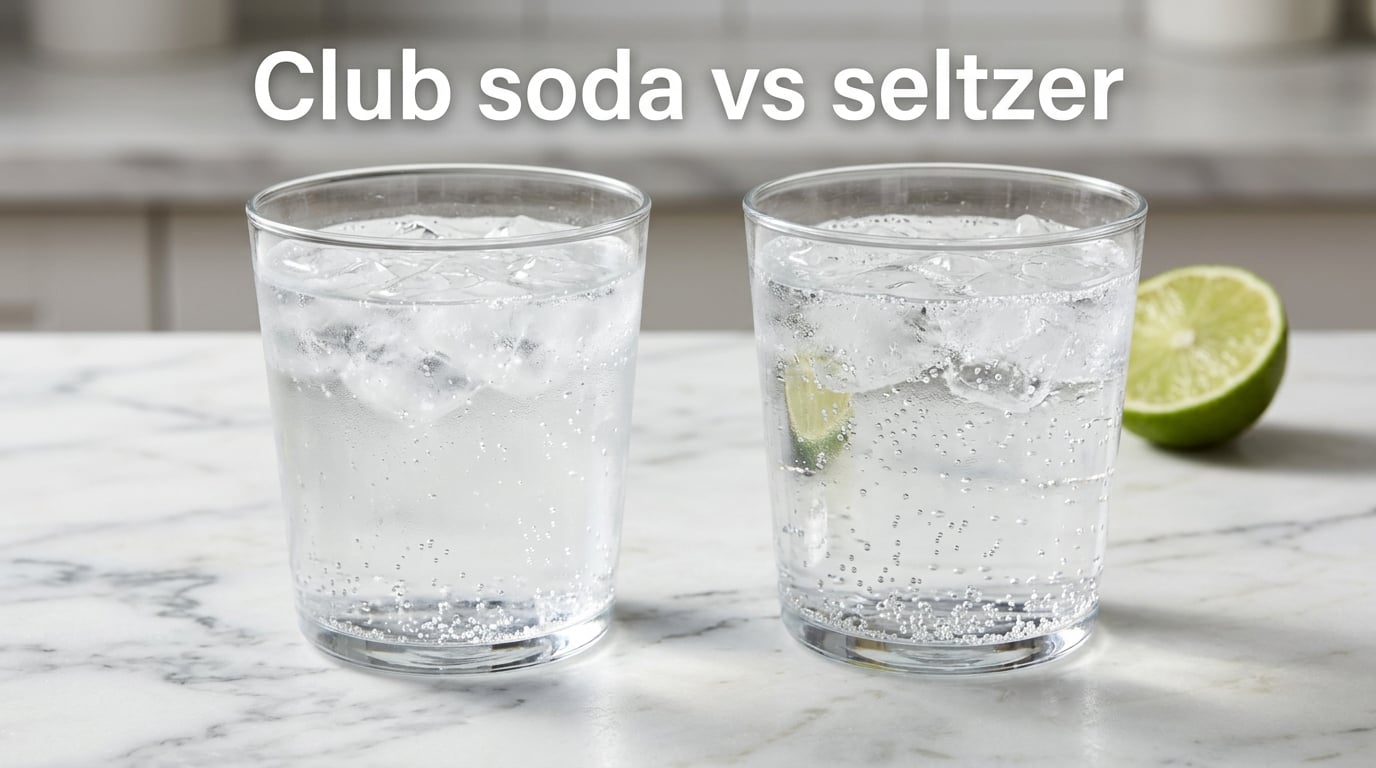
Club soda vs seltzer comes down to one thing: minerals. Both are carbonated water made by infusing plain water with pressurized CO2 gas, but club soda has added mineral salts like sodium bicarbonate and potassium sulfate. Seltzer is plain water plus carbonation, nothing else, which gives it a clean taste that won’t fight whatever you mix it with.
I drink both regularly, and the choice between them changes based on what I’m making. After testing them side by side for months, here’s everything that actually separates these two bubbly waters.
Table of Contents
Seltzer is plain water with added carbonation and nothing else
Seltzer is water infused with carbon dioxide under pressure. That’s the whole recipe. No minerals, no sodium, no flavoring, no sweeteners. Just H2O and CO2 bubbles.
The name comes from the German town of Selters, which had natural springs that produced naturally carbonated water. Today’s seltzer is usually made by forcing CO2 into filtered tap water at a bottling plant.
Because there are no minerals, seltzer tastes like fizzy water with a clean finish. Some people describe it as crisp or neutral. Flavored seltzers (like LaCroix or Polar) start with plain seltzer and add natural flavors after the fact.
Club soda is carbonated water with added minerals for taste
Club soda is also water plus CO2, but with a twist: manufacturers add mineral salts to mimic the taste of natural spring water. The most common additives are sodium bicarbonate, potassium sulfate, potassium bicarbonate, and sometimes magnesium sulfate.
These added minerals create a slightly salty, almost mineral-heavy taste. Some brands use enough minerals that you can pick up a faint metallic edge. Others keep it subtle, and you’d only notice the difference if you compared it directly to seltzer.
Club soda was originally created in the early 1800s as a commercial alternative to naturally carbonated mineral waters. The added minerals give it a fuller mouthfeel and a taste that stands up better to strong spirits in cocktails.
The key differences come down to minerals, taste, and best uses
- Mineral content: Seltzer has zero added minerals. Club soda contains sodium bicarbonate, potassium sulfate, and often potassium bicarbonate.
- Sodium levels: Seltzer has essentially no sodium. Club soda typically has 50-100mg of sodium per 12oz serving, depending on the brand.
- Taste profile: Seltzer tastes clean, neutral, and crisp. Club soda has a subtle saltiness and a heavier, more mineral mouthfeel.
- Best for drinking plain: Seltzer wins because its clean taste doesn’t compete with food or flavors.
- Best for cocktails: Club soda wins because the minerals enhance bubbles and add complexity to mixed drinks.
- Calorie count: Both have zero calories. Neither contains sugar or carbohydrates.
These differences are small, but they matter when you’re pickier about what you drink. I’ve found that the mineral content in club soda can actually enhance the perception of carbonation, making bubbles feel sharper on your tongue.
Bartenders reach for club soda when texture matters and seltzer when flavor shines
Professional bartenders tend to prefer club soda for most classic cocktails. The minerals help the drink hold its carbonation longer and create a more substantial mouthfeel. A whiskey soda, gin fizz, or Tom Collins all benefit from the mineral backbone.
Seltzer works better when you want the carbonated water to disappear behind other flavors. Mojitos taste cleaner with seltzer because the mint and lime are the stars. Flavored seltzers work as low-calorie cocktail mixers on their own, no extras needed.
Reddit bartenders often mention getting confused customers asking for “soda water” without knowing what they actually want. In most bar settings, if you order a vodka soda, you’ll get club soda. If you order seltzer, you’re asking for plain carbonated water.
Can you substitute one for the other in recipes? Yes, in almost every case. The cocktail police won’t show up at your door. The biggest difference is the slight saltiness in club soda, which can actually balance a sweet drink like a gin and tonic or a mojito with simple syrup.
Both hydrate equally well, but club soda has more sodium
When it comes to hydration, club soda and seltzer perform essentially the same. Both are water with bubbles, so your body processes them the same way it processes flat water.
The only nutritional difference is sodium. Most club sodas contain around 50-100mg of sodium per 12oz serving. That’s a tiny amount compared to the 2,300mg daily limit, but if you’re on a strict low-sodium diet, seltzer is the safer choice.
For most people, this difference doesn’t matter. I checked with a few nutritionists while researching this piece, and none of them considered club soda a significant source of dietary sodium. If you’re worried about hydration during exercise, our team covered sparkling water and workouts here.
If you’re watching your mineral intake for health reasons, this breakdown of potassium in mineral water goes deeper into how minerals in carbonated water actually affect your body.
Sparkling mineral water and tonic sit on opposite ends of the carbonated family
Sparkling mineral water comes from natural springs or wells where the water is naturally carbonated underground. It contains minerals that vary based on the source, and brands like San Pellegrino, Perrier, and Gerolsteiner fall into this category. San Pellegrino is technically sparkling mineral water, not club soda, even though people use the terms loosely.
Tonic water is a completely different beast. It’s carbonated water with added quinine (which gives it a bitter taste) plus sugar or high-fructose corn syrup. A standard gin and tonic uses tonic because the bitterness balances the botanicals in gin. If you swapped in club soda or seltzer, you’d get a much different, less complex drink.
For a quick decision: choose sparkling mineral water when you want distinct mineral flavors, tonic water for cocktails that need bitterness, club soda for cocktails that need lift, and seltzer when you want pure, clean carbonation.
Soda water, seltzer, and club soda mean different things in different regions
One of the biggest sources of confusion around carbonated water is regional naming. In the UK and Australia, “soda water” usually means what Americans call club soda. In the northeastern US, older generations often call any carbonated water “seltzer.” In the South and Midwest, “soda water” typically means club soda.
Reddit threads on r/explainlikeimfive and r/NoStupidQuestions are full of people admitting they use these terms interchangeably. The truth is, the naming doesn’t follow strict rules, so context matters more than the label on the bottle.
Home carbonation has exploded in recent years. SodaStream and similar devices let you carbonate tap water at home, giving you seltzer on demand. You can add mineral drops to make your own club soda, though most home carbonators default to plain seltzer.
From an environmental angle, home carbonation cuts down on single-use cans and plastic bottles. If you drink a lot of carbonated water, a SodaStream pays for itself within a few months and reduces packaging waste significantly. Check our Mineral Waters resource hub for more on sustainable water choices.
Frequently Asked Questions
Is club soda better for you than seltzer?
No, neither is meaningfully better for you than the other. Both are zero-calorie carbonated water that hydrate equally well. The main difference is that club soda contains added minerals like sodium bicarbonate and potassium sulfate, which add a small amount of sodium (typically 50-100mg per 12oz serving). For most people, this sodium level is negligible. Choose seltzer if you’re on a strict low-sodium diet.
Why do people order club soda at bars?
People order club soda at bars because it works as a low-calorie mixer that complements strong spirits without adding sugar or competing flavors. The added minerals in club soda give cocktails a fuller mouthfeel and help bubbles last longer. It’s a popular choice for whiskey sodas, gin fizzes, and vodka sodas because it lets the spirit’s flavor stay in focus while adding refreshing carbonation.
Is San Pellegrino a club soda?
No, San Pellegrino is not a club soda. San Pellegrino is a sparkling mineral water that gets its carbonation and minerals from a natural spring in Italy. Club soda is artificially carbonated with added minerals. The taste profiles differ because San Pellegrino’s minerals come from its source water, while club soda’s minerals are added during manufacturing. Both are carbonated, but they’re produced differently.
Is it okay to drink straight club soda?
Yes, drinking straight club soda is perfectly fine and safe. It’s simply carbonated water with added minerals, contains zero calories, and hydrates you as effectively as flat water. Some people find the mineral taste pleasant, while others prefer it mixed with juice or spirits. If you enjoy the slightly salty, mineral-forward taste, drinking it on its own is a healthy alternative to soda.
Pick seltzer for pure taste and club soda for cocktails that need lift
Club soda vs seltzer doesn’t have a single right answer. For daily drinking and recipes where you want clean carbonation, seltzer is the better pick. For cocktails where texture and mineral complexity matter, club soda is the go-to choice.
Both are zero calories, both hydrate equally well, and both work as healthy alternatives to soda. Updated for 2026, this guide should give you the confidence to pick the right one every time you reach for a bubbly drink.