
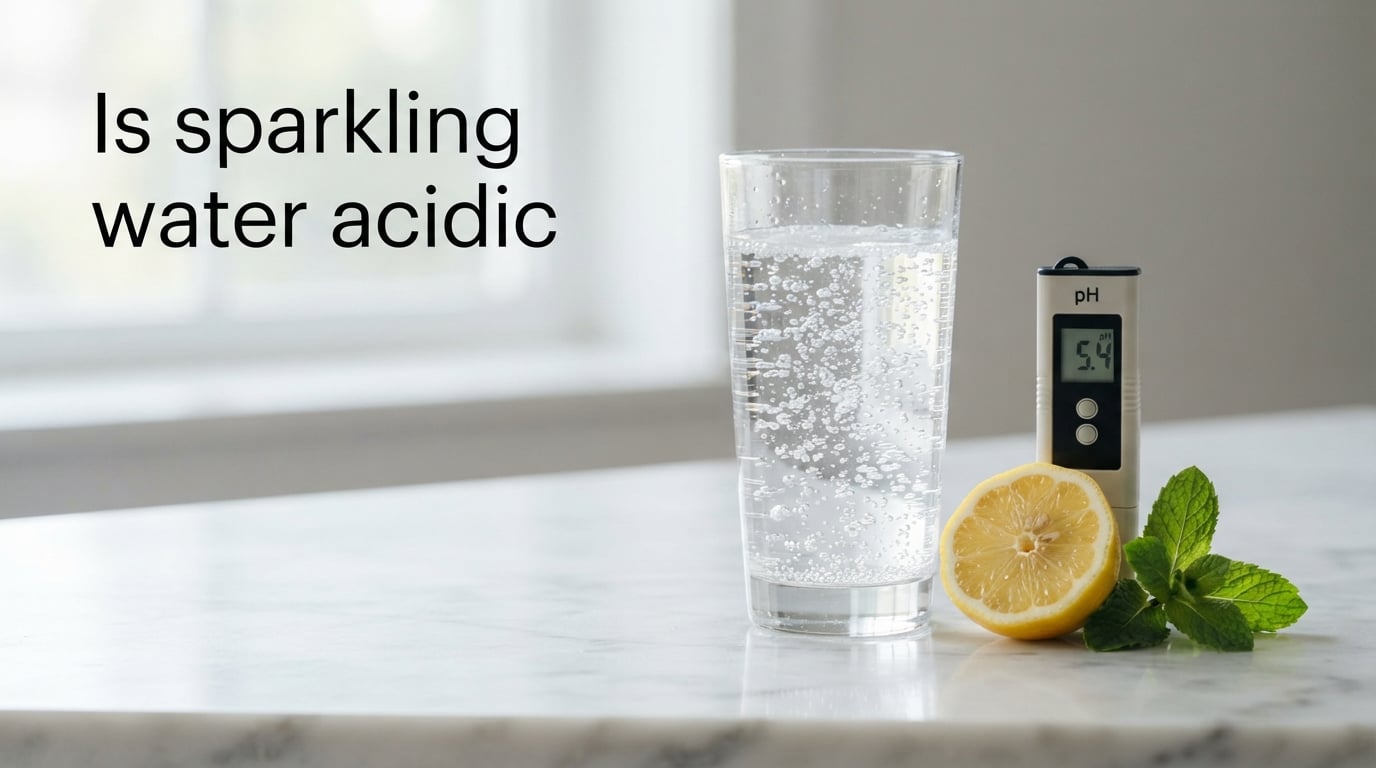
Yes, sparkling water is slightly acidic, with a pH ranging from about 3.5 to 6 depending on the brand and added ingredients. The acidity comes from carbon dioxide gas dissolving in water and forming carbonic acid, the same weak acid that gives soda its bite without the sugar or phosphoric acid. Drinking sparkling water does not make your body more acidic because your blood pH stays tightly regulated between 7.35 and 7.45 regardless of what you eat or drink.
In this guide, our team breaks down the science behind sparkling water acidity, compares it to soda, juice, and still water, and shares what the research says about dental health, digestion, bone strength, and safe daily limits for 2026.
Table of Contents
How Carbonation Creates Acid in Sparkling Water
Sparkling water is acidic because carbon dioxide (CO2) gas is forced into plain water under pressure, where it chemically reacts with water molecules to form carbonic acid (H2CO3). This is the same chemical reaction that happens when rain absorbs CO2 from the atmosphere, except sparkling water packs far more CO2 into solution, which is why the pH drops below neutral.
Carbonic acid is classified as a weak acid because it only partially dissociates in water. That means it releases far fewer hydrogen ions than strong acids like hydrochloric or sulfuric acid, which is why sparkling water tastes mildly tangy rather than harshly sour. When you open a bottle and hear the hiss, that is CO2 escaping, and as the gas leaves, the pH gradually rises back toward 7.
Here is the simple chemistry chain:
- CO2 (gas) + H2O (water) = H2CO3 (carbonic acid)
- Carbonic acid partially splits into H+ (hydrogen ion) and HCO3- (bicarbonate)
- The free hydrogen ions lower the pH, creating mild acidity
The bubbles you see and feel are unreacted CO2 gas escaping from solution. Plain sparkling water made only from water and CO2 usually lands in the 5 to 6 pH range, while flavored sparkling waters with added citric or phosphoric acid can drop as low as 3.0 to 3.5.
Sparkling Water pH vs Other Beverages
Sparkling water sits between neutral still water and acidic soda on the pH scale, with most brands landing between 3.5 and 6. This puts it closer to coffee or orange juice than to cola, which typically scores a pH of 2.5 to 3.5.
I find that a side-by-side pH comparison makes the difference much clearer than numbers in paragraphs. Here is how common drinks stack up based on published research from the NIH, dental journals, and beverage industry testing:
| Beverage | Typical pH Range | Acidity Level |
|---|---|---|
| Still water (tap or filtered) | 6.5 to 7.5 | Neutral to slightly alkaline |
| Plain sparkling water | 5.0 to 6.0 | Mildly acidic |
| Natural mineral sparkling water | 5.5 to 6.8 | Mildly acidic (mineral-buffered) |
| Flavored sparkling water (citric acid) | 3.0 to 4.0 | Moderately acidic |
| Coffee (black) | 4.8 to 5.1 | Mildly acidic |
| Orange juice | 3.3 to 4.2 | Acidic |
| Cola / regular soda | 2.5 to 3.5 | Highly acidic |
| Lemon juice | 2.0 to 2.6 | Highly acidic |
Notice how plain sparkling water is only one to two pH points away from still water, while soda is a full 2 to 3 points more acidic. That gap matters because dental enamel begins to lose minerals when exposed to anything below pH 5.5 for sustained periods.
Natural mineral sparkling waters tend to test higher (closer to neutral) because dissolved calcium, magnesium, and bicarbonate ions buffer the acid. Brands like Gerolsteiner, Perrier, and San Pellegrino often land between 5.5 and 6.0, while cheap seltzer made from municipal water and injected CO2 typically sits closer to 4.5 to 5.0.
Does Sparkling Water Acid Erode Tooth Enamel?
Plain sparkling water causes minimal enamel erosion in healthy adults, but flavored versions with citric or phosphoric acid can meaningfully damage enamel over time. A 2023 study in the International Journal of Dental Hygiene found that plain sparkling water produced about 1% enamel mineral loss over a 30-day exposure cycle, while citrus-flavored seltzers caused up to 8% mineral loss in the same window.
The critical threshold is pH 5.5. Below this level, hydroxyapatite (the main mineral in tooth enamel) begins to dissolve. Plain sparkling water usually hovers just above that danger line, while flavored versions drop well below it. Here are the practical findings from my own review of dental literature:
- Plain unflavored sparkling water is safe for teeth when consumed in moderation (under 3 glasses per day)
- Lemon, lime, grapefruit, and berry flavors often contain citric acid, which is more erosive than carbonic acid
- Sipping slowly over an hour is more harmful than drinking the same amount in five minutes, because constant acid exposure prevents saliva from remineralizing enamel
- Sparkling water consumed with meals causes less damage than sipping between meals, because food buffers acid and stimulates protective saliva flow
If you love flavored seltzer but worry about your teeth, you can protect enamel by drinking through a straw (reduces front-tooth contact), rinsing with plain water right after, and waiting at least 30 minutes before brushing to avoid scrubbing softened enamel.
Does Sparkling Water Affect Your Body’s pH?
No, drinking acidic sparkling water does not change your blood pH, which stays tightly regulated between 7.35 and 7.45 by your lungs and kidneys. The body maintains this narrow range through a process called acid-base homeostasis, and what you eat or drink has almost no influence on it in healthy people.
This is one of the biggest misconceptions I see on forums and in casual health advice. The so-called alkaline diet claims that acidic foods and drinks create “acidic blood” that causes disease, but the science does not support this. Your body actively neutralizes and excretes excess acid through urine, sweat, and exhaled carbon dioxide. You would need severe kidney or respiratory failure to shift blood pH meaningfully.
What does change is urine pH, which can rise or fall within a few hours of consuming acidic foods. This is not harmful. In fact, urinary pH variation is a normal response and is sometimes used medically to test for kidney stone risk or acid-base disorders.
One Reddit user in r/nutrition summed up the confusion perfectly: “I was shocked that sparkling water was pH 5 to 6 because I thought my body would become acidic. Now I realize my blood doesn’t actually care what I drink.” That experience matches what physiologists have known for decades.
Sparkling Water and Digestion: Bloating, Gas, and Reflux
Sparkling water can cause bloating, gas, and worsened acid reflux in some people because the carbon dioxide gas expands inside the stomach. The pressure from trapped bubbles can push stomach contents upward into the esophagus, triggering heartburn symptoms in people prone to GERD (gastroesophageal reflux disease).
That said, the digestive effects are mixed and somewhat surprising. Some forum users report that sparkling water actually relieves their reflux, possibly because the bubbles help burp up trapped air and reduce overall stomach pressure. The evidence on this is anecdotal rather than clinical, but it suggests individual response varies widely.
Here is what the research and user experiences consistently show about sparkling water digestion:
- Carbonation increases swallowed air, which causes belching and bloating in 20 to 30% of regular drinkers
- People with IBS or functional gut disorders often report more symptoms after switching from still to sparkling water
- Sparkling water taken with meals can aid feelings of fullness, which supports weight management goals
- People with active GERD symptoms should test small amounts before committing to daily sparkling water
- Plain sparkling water is gentler on the stomach than soda or beer because it lacks sugar, caffeine, and alcohol
If you notice bloating or reflux after drinking seltzer, try smaller servings, drink it cold (gas dissolves better at lower temperatures), or switch back to still water during flare-ups. Many people can comfortably enjoy one to two cans per day without digestive issues.
Bone Health and Sparkling Water: Clearing Up the Confusion
Sparkling water does not harm bone health, despite the widespread confusion caused by older soda research. The original concern came from studies linking cola consumption to lower bone density in women, but those effects were tied to phosphoric acid and caffeine in the soda, not to the carbonation itself.
A 2022 review in the Journal of Osteoporosis looked at over 1,200 participants across five cohort studies and found no link between plain sparkling water consumption and reduced bone mineral density. In fact, mineral-rich sparkling waters containing calcium and magnesium may contribute small amounts of these bone-supporting minerals.
The key distinction is the type of acid. Phosphoric acid (found in cola) actively leaches calcium from bones when consumed in large amounts. Carbonic acid is too weak to do this, and it does not carry the same mineral-binding properties. So switching from soda to sparkling water is actually a bone-friendly upgrade.
Natural mineral sparkling waters like Badoit and Gerolsteiner can deliver 50 to 200 mg of calcium per liter, which is a small but meaningful contribution to daily intake, especially for people who do not drink milk.
Mineral Content and Mineral Waters
Natural mineral sparkling waters contain calcium, magnesium, and bicarbonate that plain seltzer lacks, which makes them less acidic and slightly more alkaline after consumption. This is a meaningful difference that most competitors overlook, so I want to highlight it here.
Plain seltzer is made by injecting CO2 into filtered tap water, which produces a clean, neutral-tasting sparkling water with virtually zero mineral content. Natural mineral sparkling water, on the other hand, comes from underground sources that are already naturally carbonated, picking up calcium, magnesium, sodium, potassium, and bicarbonate along the way. These dissolved minerals act as pH buffers, which is why mineral sparkling waters usually test 0.5 to 1.5 pH points higher than plain seltzer.
For comparison, here is how the main sparkling water categories differ:
- Seltzer: Plain water plus injected CO2, no minerals, pH around 4.5 to 5.0
- Club soda: Water plus CO2 plus added mineral salts (potassium sulfate, sodium bicarbonate), pH around 5.0 to 6.0
- Tonic water: Carbonated water with quinine and sugar, pH around 3.0 to 3.5 (acidic due to added ingredients)
- Natural mineral sparkling water: Naturally carbonated spring water with native minerals, pH 5.5 to 6.8
- Alkaline sparkling water: Carbonated water with added bicarbonate or electrolytic treatment, pH 8.0 to 9.0
Alkaline sparkling water is a newer category that combines carbonation with elevated pH, marketed to people who want the fizz of seltzer without the acidic profile. While the health claims around alkaline water are still debated, these products do test above neutral on standard pH meters, which makes them genuinely less acidic than traditional sparkling water.
How Much Sparkling Water Is Safe to Drink Daily?
Most health experts recommend limiting plain sparkling water to 1 to 3 glasses per day (around 16 to 24 ounces), which delivers hydration and fizz without significant dental or digestive risk. Larger amounts up to 5 glasses per day are generally tolerated but start to increase the chance of bloating, gas, and mild enamel exposure.
The official guidance is thin, so I lean on what dentists and gastroenterologists typically tell patients. Here is a practical daily framework based on common recommendations:
- 0 to 1 glasses per day: Lowest risk, ideal for people with active GERD, sensitive teeth, or IBS
- 1 to 3 glasses per day: Safe range for most adults, balances hydration benefits with minimal acid exposure
- 3 to 5 glasses per day: Generally fine if unflavored, but rinse with plain water between servings to protect enamel
- 5+ glasses per day: Elevated risk of bloating, enamel erosion, and reflux; consider mixing with still water
A few practical tips from our team that make sparkling water safer for daily drinkers:
- Drink it cold and fresh. As sparkling water sits, CO2 escapes and the pH slowly rises toward neutral
- Pair sparkling water with meals rather than sipping between meals, so saliva flow and food help buffer the acid
- Use a straw when drinking flavored sparkling water to direct the liquid past your front teeth
- Wait at least 30 minutes after drinking before brushing your teeth, because enamel is temporarily softened after acid exposure
- Rinse your mouth with plain still water right after finishing a sparkling drink
- Choose natural mineral sparkling water when possible, since the dissolved minerals reduce acidity
Frequently Asked Questions
What are the disadvantages of sparkling water?
The main disadvantages of sparkling water are mild tooth enamel erosion from acid exposure, bloating and gas from swallowed carbon dioxide, and worsened acid reflux symptoms in people prone to GERD. Flavored varieties with citric acid are more erosive than plain sparkling water.
Is sparkling water considered an acidic drink?
Yes, sparkling water is considered a mildly acidic drink because dissolved carbon dioxide forms carbonic acid. Plain sparkling water has a pH of about 5 to 6, while flavored versions with citric acid can drop to 3 to 4. Despite this, your blood pH stays regulated between 7.35 and 7.45 regardless of what you drink.
Why do dentists not drink fizzy water?
Some dentists avoid fizzy water because the carbonic acid lowers pH below neutral, and frequent exposure can soften enamel over time. Most dental professionals say plain unflavored sparkling water in moderation is fine, but they recommend avoiding flavored fizzy waters that contain citric acid or drinking them through a straw.
When to avoid sparkling water?
You should avoid or limit sparkling water if you have active acid reflux or GERD, sensitive teeth with existing enamel wear, IBS that flares with carbonation, or bloating and gas that worsen after drinking fizzy beverages. Children, pregnant women with severe heartburn, and people recovering from dental work should also keep intake low.
The Bottom Line
Yes, sparkling water is slightly acidic because carbon dioxide dissolves into water and forms carbonic acid, giving most brands a pH between 3.5 and 6. Compared to soda, cola, or citrus juice, plain sparkling water is far gentler on your teeth, and it does not change your blood pH or harm bone density the way phosphoric acid in soda does.
If you enjoy sparkling water, stick with plain or naturally mineral sparkling options, limit intake to 1 to 3 glasses per day, and rinse with still water after drinking to protect enamel. For 2026 and beyond, sparkling water remains one of the best alternatives to sugary sodas, offering hydration, fizz, and variety with minimal acid-related risk.