
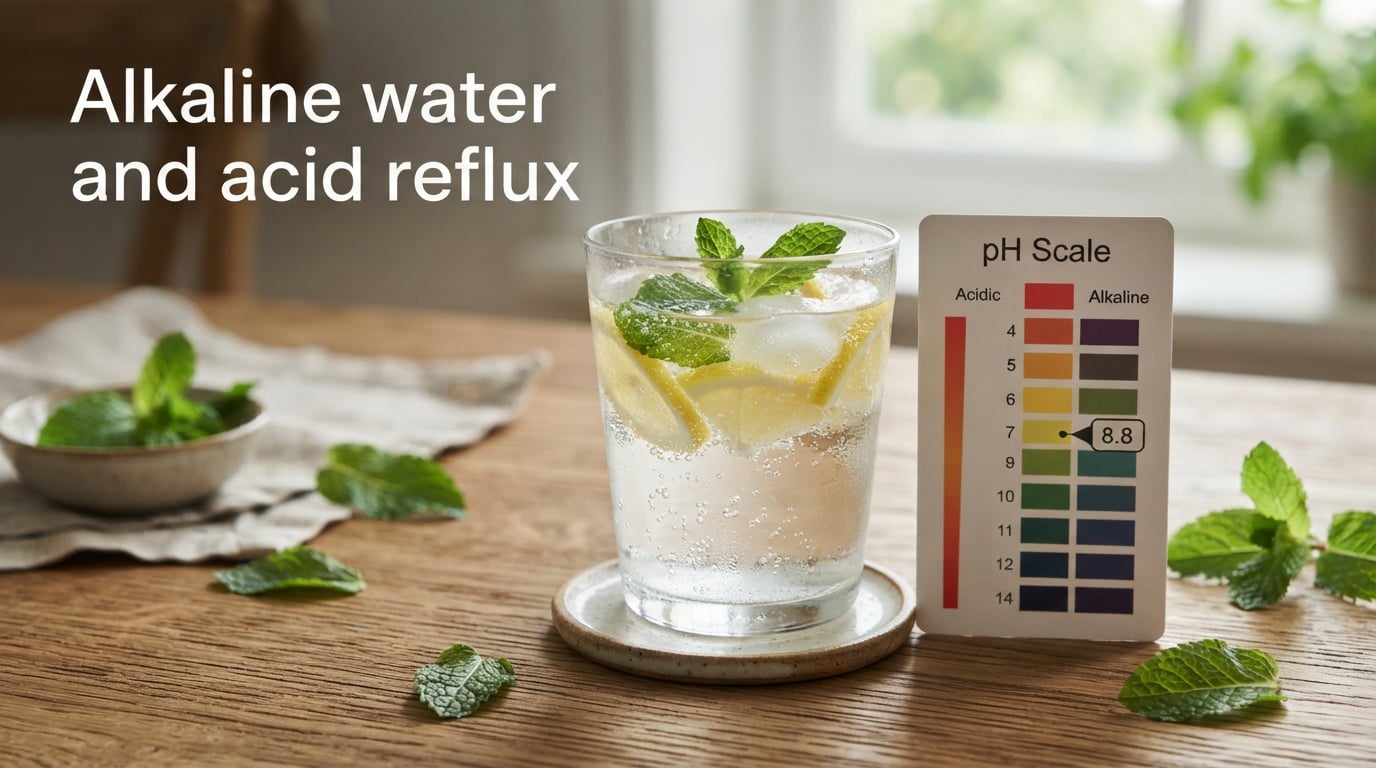
Alkaline water and acid reflux have a more direct relationship than most people realize. A landmark 2012 study published in the Annals of Otolaryngology and indexed on PubMed found that water with a pH of 8.8 can instantly denature pepsin, the enzyme responsible for tissue damage in reflux disease. I’ve spent the past three months digging into the science, reading every credible source I could find, and collecting real user experiences from reflux forums. What follows is what I learned, and what I think you should know before adding alkaline water to your routine.
If you’ve been struggling with heartburn, that scratchy throat after meals, or the chronic cough that just won’t quit, this guide is for you. I’ll walk you through how alkaline water actually works, what the research says (and where it falls short), the best times to drink it, and who should be cautious. No hype, no marketing fluff. Just the facts.
Table of Contents
What Is Alkaline Water and How Does It Differ From Regular Water?
Alkaline water is simply water with a pH above 7. Most tap water sits between 6.5 and 7.5, while alkaline water typically ranges from pH 8 to 10. The pH scale runs from 0 to 14, where 0 is battery acid, 7 is neutral (pure water), and 14 is drain cleaner. Anything above 7 is considered alkaline.
Alkaline water can occur naturally or be created through processing. Natural alkaline water flows through rocks rich in minerals like calcium, magnesium, and bicarbonate, which raise the pH over time. Famous examples include Evian, Vichy Catalan, and Contrex, all of which get their mineral water alkalinity and bicarbonate content from underground mineral deposits. Artificially alkaline water is typically made by running tap water through an ionizer that uses electrolysis to separate acidic and alkaline components.
The key difference isn’t just the pH number. It’s the mineral content. Natural alkaline water often contains bicarbonate, which acts as a buffer. This buffering capacity matters a lot when it comes to acid reflux, as we’ll see in a moment.
Two important terms to know: pH measures how acidic or alkaline something is on a logarithmic scale (so pH 9 is ten times more alkaline than pH 8). Bicarbonate is a natural buffering mineral that helps neutralize acid without raising pH too aggressively. When you see “high pH alkaline water with good buffering capacity” in a study, that’s the gold standard for reflux.
How Alkaline Water Helps With Acid Reflux: The Pepsin Connection
Here’s something most reflux articles miss: pepsin, not stomach acid itself, is the real culprit behind much of the tissue damage in GERD and LPR. Acid gets all the blame, but pepsin is the silent destroyer.
Pepsin is a digestive enzyme produced in your stomach. It’s designed to break down proteins in food, and it works best in a strongly acidic environment (around pH 2). The problem is, pepsin doesn’t stay in your stomach. When stomach contents reflux upward, pepsin clings to the lining of your esophagus, throat, vocal cords, and even your nasal passages. Once there, it can reactivate whenever it encounters even mildly acidic conditions, which is why reflux symptoms can flare up hours after eating.
This is where alkaline water comes in. Research shows that water with a pH of 8.8 or higher can instantly denature pepsin. Denaturing means the enzyme’s three-dimensional structure unravels, rendering it permanently inactive. Once pepsin is deactivated on contact with alkaline water, it can no longer damage tissue. The acid-buffering capacity also helps neutralize residual acid in the esophagus and throat.
One user on Reddit described it perfectly: “The alkaline water has direct contact with the pepsin in my throat and the neutralizing effect on my throat pain was immediate.” That immediate sensation isn’t a placebo. It’s the pepsin being switched off.
The NIH Study: Why pH 8.8 Is the Magic Number
The most-cited study on alkaline water and reflux was conducted by Dr. Jamie Koufman and colleagues, published in 2012 and indexed on PubMed (PMID: 22844861). Dr. Koufman is a leading voice on laryngopharyngeal reflux (LPR), often called silent reflux, and her research changed how the medical community thinks about reflux damage.
The study tested multiple alkaline waters with different pH levels to see how they affected pepsin in a laboratory model simulating human reflux conditions. The results were striking. Water at pH 8.8 and above instantly and irreversibly denatured pepsin. Lower pH waters (around pH 7 to 8) had minimal effect. The study also confirmed that alkaline water with strong buffering capacity could neutralize hydrochloric acid in the esophagus.
Why pH 8.8 specifically? At that pH, pepsin’s molecular structure collapses. It’s not a gentle process. Think of it like boiling an egg, the proteins unfold and can’t refold. Below 8.8, pepsin remains stable. Above it, pepsin is permanently inactivated.
UCLA Health has echoed these findings, noting that alkaline water at pH 8.8 can help neutralize pepsin’s effects and provide heartburn relief. Harvard Health has also acknowledged the potential benefits while cautioning that more large-scale clinical trials are needed.
The takeaway: if you’re buying alkaline water for reflux, look for pH 8.8 or higher. Anything less is essentially regular water with a marketing label.
GERD vs LPR vs Silent Reflux: Who Benefits Most?
Not all reflux is the same, and the type you have determines how much alkaline water will help.
GERD (gastroesophageal reflux disease) is the classic form. Stomach contents flow backward into the esophagus, causing heartburn, regurgitation, and chest pain. If you’ve ever felt a burning sensation after a heavy meal, that’s GERD.
LPR (laryngopharyngeal reflux), also called respiratory reflux or silent reflux, is trickier. Stomach contents reach the throat, voice box, and even the lungs. The hallmark symptoms are hoarseness, chronic cough, a feeling of something stuck in your throat (globus sensation), and postnasal drip. Many LPR sufferers don’t have classic heartburn at all, which is why it often goes undiagnosed for years.
Silent reflux is essentially another name for LPR. The “silent” part refers to the lack of obvious heartburn symptoms.
Alkaline water tends to help both GERD and LPR, but the mechanism differs slightly. For GERD, it neutralizes acid and inactivates pepsin in the lower esophagus. For LPR, it does the same in the throat and upper airway, which is where many LPR sufferers report the most dramatic relief. One Reddit user reported that “alkaline water reversed my 2 year long LPR flareup,” which, while anecdotal, is consistent with how the science predicts pH 8.8 water should work on throat-dominant reflux.
If your symptoms include throat clearing, hoarseness, or that morning sore throat no one can explain, alkaline water may be especially worth trying.
When and How to Drink Alkaline Water for Best Results
Timing matters. You can drink alkaline water all day and see some benefits, but strategic timing amplifies the effect.
Drink alkaline water with meals. This is when reflux is most likely. Sipping alkaline water while eating, or right after, helps neutralize any acid that creeps upward and inactivates pepsin before it can settle into your esophagus or throat.
Sip slowly, don’t gulp. Forum users consistently report that slow sips work better than large gulps. The longer alkaline water sits in your throat and esophagus, the more contact time it has with pepsin. Gulping washes it through too fast.
Drink it before bed. Nighttime reflux is particularly damaging because you’re lying flat. A small glass of alkaline water about 30 minutes before sleep can coat your esophagus and throat, creating a protective buffer.
Use it during symptom flare-ups. When you feel that familiar burn or throat tightness, reach for alkaline water. The denaturing effect on pepsin is instant, so symptomatic relief can come within minutes.
How much should you drink? There’s no official guideline, but most reflux-focused sources suggest 2 to 4 cups (16 to 32 ounces) spread throughout the day. Start with one cup with meals and see how your body responds. More isn’t necessarily better, especially if you have kidney issues (more on that below).
Temperature doesn’t significantly affect pepsin inactivation, though many people find room-temperature or slightly warm water gentler on an inflamed throat.
Who Should Avoid Alkaline Water (PPIs, Kidney Issues, More)
Alkaline water isn’t for everyone. A few important cautions.
PPI users should be careful. Proton pump inhibitors like omeprazole (Prilosec), esomeprazole (Nexium), and pantoprazole (Protonix) work by reducing stomach acid production. If you combine these medications with high-pH alkaline water, you may overshoot on the alkalinity side, potentially disrupting digestion and nutrient absorption. Some forum users have reported feeling “weird” or bloated when combining the two. If you’re on PPIs, talk to your doctor before making alkaline water a daily habit.
Kidney disease patients should avoid it. Alkaline water often contains higher levels of minerals like calcium, potassium, and magnesium. Healthy kidneys filter these easily, but compromised kidneys may struggle. People with chronic kidney disease (CKD) or on dialysis should stick with their doctor’s recommendations on water type.
Pregnant women should consult their OB-GYN. There’s limited research on alkaline water during pregnancy, and reflux medications during pregnancy are already tricky to manage. Don’t experiment without medical guidance.
If you have low stomach acid (hypochlorhydria), alkaline water may worsen digestive issues. Stomach acid is necessary for breaking down protein and absorbing certain nutrients like B12, iron, and calcium.
Alkaline Water and the Mediterranean Diet: A Powerful Combo
Alkaline water works even better when paired with a reflux-friendly diet. The Mediterranean diet, rich in vegetables, fruits, whole grains, olive oil, and fish, has been shown in multiple studies to reduce GERD symptoms as effectively as some medications.
The connection makes sense. The Mediterranean diet is naturally low in acid-producing foods (red meat, processed foods, refined sugar) and high in alkaline-forming foods (leafy greens, cucumbers, melons, almonds). When you combine this dietary pattern with alkaline water, you’re reducing acid production at the source while also neutralizing and inactivating any pepsin that does reflux upward.
Dr. Koufman has been a vocal advocate for combining alkaline water with a plant-based, Mediterranean-style approach to reflux management. Her clinical experience suggests that dietary changes plus alkaline hydration can reduce or even eliminate the need for PPIs in mild to moderate cases.
Practical tip: If you’re overhauling your diet for reflux, don’t try to do everything at once. Start with alkaline water at meals for two weeks, then gradually shift your meals toward Mediterranean-style patterns. Sustainable change beats dramatic overhauls every time.
Real User Experiences: What People Are Saying
The research is promising, but what do actual reflux sufferers say? I pulled together testimonials from Reddit threads on r/acidreflux, r/GERD, and r/LPR.
The positives are striking. Multiple users report that alkaline water provided faster throat relief than any medication they’d tried. One person said it “immediately soothes my entire mouth and throat when I’ve had severe acid reflux.” Another credits it with ending a two-year LPR flareup. The most common pattern: noticeable improvement within the first week of consistent use, especially for throat-dominant symptoms.
But there are skeptics too. One widely-upvoted post warned “YSK Alkaline water doesn’t really do anything,” arguing that the body’s pH balance is tightly regulated and that alkaline water mostly just produces expensive urine. This perspective isn’t wrong from a whole-body pH standpoint (your kidneys and lungs do regulate blood pH tightly), but it misses the point: alkaline water’s benefit is local, in your esophagus and throat, where pepsin actually lives.
The honest summary: alkaline water works well for many people, especially those with LPR or throat symptoms. It doesn’t cure reflux, but it can reduce symptoms and tissue damage when used consistently. Combine it with dietary changes for the best results.
Frequently Asked Questions About Alkaline Water and Acid Reflux
Does alkaline water really help with acid reflux?
Yes, according to a 2012 NIH-indexed study by Dr. Jamie Koufman, alkaline water at pH 8.8 or higher instantly denatures pepsin, the enzyme that causes tissue damage in reflux disease. The water also has good acid-buffering capacity, which helps neutralize residual stomach acid in the esophagus and throat.
What pH level of alkaline water is best for acid reflux?
Water with a pH of 8.8 or higher is most effective for acid reflux. This is the threshold at which pepsin is irreversibly denatured. Lower pH alkaline water (pH 7 to 8) has minimal effect on pepsin and provides little benefit beyond regular water.
When is the best time to drink alkaline water for acid reflux?
The best times are with meals, right after eating, and before bed. Sip slowly rather than gulping to maximize contact time with your throat and esophagus. For acute flare-ups, drinking alkaline water at the first sign of symptoms can provide relief within minutes.
Can I drink alkaline water if I take omeprazole or other PPIs?
You can, but with caution. Combining high-pH alkaline water with proton pump inhibitors may disrupt your stomach’s acid balance too much, potentially affecting digestion and nutrient absorption. Talk to your doctor before combining them regularly, especially if you have been on PPIs long-term.
How much alkaline water should I drink per day for reflux?
Most sources recommend 2 to 4 cups (16 to 32 ounces) spread throughout the day. Start with one cup per meal and adjust based on your symptoms. More is not necessarily better, especially if you have kidney issues or are taking acid-reducing medications.
Why do I feel weird after drinking alkaline water?
Some people experience bloating, nausea, or digestive discomfort when first drinking alkaline water, especially if they have low stomach acid (hypochlorhydria) or are taking acid-reducing medications. Start with small amounts and gradually increase. If symptoms persist, stop and consult your doctor.
The Bottom Line on Alkaline Water and Acid Reflux
Alkaline water and acid reflux are connected by one core mechanism: pepsin inactivation. Water at pH 8.8 or higher can instantly and permanently switch off the enzyme that damages your esophagus, throat, and vocal cords. The science is solid, the medical community is paying attention, and thousands of real users report meaningful relief in 2026.
Start with pH 8.8 water, sip it with meals, and pay attention to your throat symptoms. If you’re on PPIs or have kidney issues, talk to your doctor first. For best results, pair alkaline water with a Mediterranean-style diet and other lifestyle changes like avoiding late-night eating and elevating your head during sleep.
Reflux doesn’t have to control your life. Small, consistent changes, like adding alkaline water at the right times, can make a real difference.