
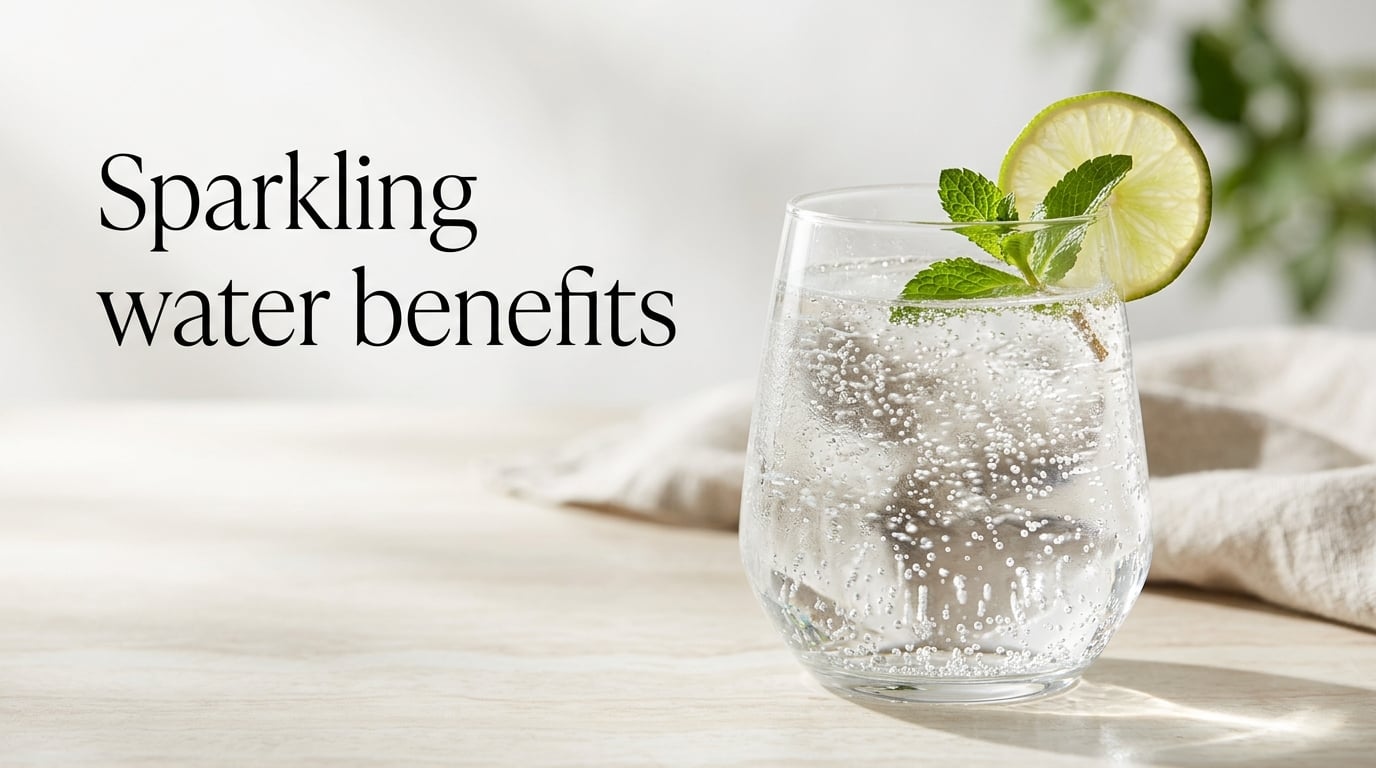
Sparkling water benefits include improved hydration, support for weight management, better digestive health, and a satisfying zero-calorie alternative to sugary drinks. Sparkling water is plain water infused with carbon dioxide gas under pressure, creating bubbles and a mildly fizzy taste that makes it far easier for many people to hit their daily fluid targets than still water alone.
If you have ever wondered whether the bubbly stuff actually does anything for your health – or whether the acidity concerns you keep reading about are something to genuinely worry about – you are not alone. Questions about carbonated water and health consistently rank among the most searched nutrition topics, and the answers are more nuanced than a simple yes or no.
The good news is that the research in 2026 tells a largely positive story. Studies from medical institutions including the University Hospitals system and data published in journals like the American Journal of Clinical Nutrition give us a solid foundation for understanding what sparkling water actually does inside your body.
This guide covers what the science actually says about each major benefit, addresses the concerns people worry about most (tooth enamel, bone density, kidney function), and gives you practical guidance on how to choose and drink sparkling water wisely.
Table of Contents
What Is Sparkling Water?
Sparkling water is plain water that has been infused with carbon dioxide (CO2) gas under pressure. When the CO2 dissolves in water, it forms carbonic acid, giving the drink its characteristic bubbles and a slightly acidic pH that typically falls between 5 and 6. Regular tap water sits at a neutral pH of 7, so sparkling water is mildly more acidic – a fact that fuels many of the dental and health concerns we will address below.
There are several distinct types of carbonated water, and the health differences between them matter more than most people realize:
Seltzer water – plain water with added carbonation and no minerals added
Club soda – carbonated water with added minerals like potassium bicarbonate and sodium chloride, which gives it a slightly different taste
Sparkling mineral water – naturally or artificially carbonated water that contains naturally occurring minerals such as calcium and magnesium from its underground source
Tonic water – carbonated water with added quinine, and often with sugar or high-fructose corn syrup included
Tonic water is the outlier in this group. Unlike the others, it typically contains added sugar and can carry a similar calorie count to a regular soft drink. When people discuss the health benefits of sparkling water, they are almost always referring to plain seltzer, club soda, or sparkling mineral water – not tonic water.
Sparkling Water Benefits
It Hydrates Just as Well as Regular Water
One of the most persistent myths about carbonated water is that the carbonation somehow makes it less hydrating than still water. The research does not support this. Studies examining the hydration effects of sparkling versus still water have consistently found no meaningful difference in how much fluid the body absorbs and retains.
For people who genuinely struggle to drink enough water during the day, sparkling water can be a real improvement. The fizz and subtle change in mouthfeel make drinking more enjoyable, and members of online communities like Reddit’s r/HydroHomies frequently report that switching to sparkling water was the one change that finally helped them hit their daily hydration goals consistently.
If you have been choosing still water over sparkling because you believed carbonated water was somehow dehydrating or less effective, you can stop. Both count equally toward your daily fluid intake, and the one you will actually drink is the better choice.
It Can Help with Weight Management
Plain sparkling water contains zero calories and zero sugar, making it a direct substitute for sodas and sweetened beverages that contribute substantially to daily calorie totals. Swapping one can of regular soda per day for sparkling water eliminates around 150 calories without requiring any other changes to your diet, and that adds up to over 54,000 calories per year.
Carbonation may also extend your feeling of fullness. Research has found that sparkling water slows the rate at which the stomach empties, which keeps you feeling satisfied longer between meals. This is why many people use sparkling water as a between-meal drink specifically to reduce the pull toward unnecessary snacking.
On its own, sparkling water is not a weight loss solution, but as part of a thoughtful approach to eating, cutting liquid calories by replacing soda with it can produce meaningful results over months and years without any sense of deprivation.
It Supports Digestive Health
Sparkling water has a documented positive effect on digestion for many people. Research shows it can improve the ability to swallow by stimulating the nerves that control this function, which is particularly helpful for people who have swallowing difficulties. Studies involving people with digestive complaints like chronic constipation found that drinking sparkling water provided meaningful relief compared to still water.
For people who experience an upset stomach or general discomfort after eating, the gentle carbonation can help. The bubbles appear to promote the movement of food through the digestive tract, reducing discomfort and that heavy, stuck feeling that sometimes follows a large meal.
The one exception to watch: if you have gastroesophageal reflux disease (GERD), carbonation can trigger or worsen reflux symptoms in some people. If you notice that sparkling water makes your reflux worse, this is a clear signal to stick with still water instead.
The Bone Health Myth, Debunked
Many people avoid sparkling water because they have heard that fizzy drinks leach calcium from the body and weaken bones. This concern is misplaced when applied to plain sparkling water. The research linking carbonated beverages to lower bone density specifically implicates cola drinks, which contain phosphoric acid – an ingredient that does not appear in sparkling water of any kind.
A well-known long-term study from Tufts University found that only cola beverages were associated with lower bone mineral density in women – not other carbonated drinks including plain sparkling water. Beyond that, sparkling mineral water that contains calcium and magnesium may actually contribute meaningfully to your daily mineral intake, potentially supporting bone health rather than harming it.
If you have been avoiding sparkling water out of concern for your bones, the evidence says you do not need to. The bone density concern belongs to cola, not carbonation itself.
Early Evidence for Heart Health
Some research suggests that sparkling water – particularly natural mineral water – may offer modest benefits for cardiovascular markers. One study found that women drinking sodium-rich natural sparkling mineral water showed reduced levels of LDL (bad) cholesterol and increased levels of HDL (good) cholesterol compared to those drinking plain still water over the same period.
It is worth being clear that this research is still in early stages, the effect sizes are modest, and the mineral content of the specific water used likely played a significant role. This benefit does not extend to plain seltzer that contains no naturally occurring minerals.
Still, it adds to the broader picture that plain or mineral sparkling water is not simply neutral for health – it may carry small but positive effects when consumed regularly as part of an otherwise balanced diet.
What to Watch Out For
Dental Health: The Real Story
Carbonic acid is the main dental health concern associated with sparkling water. Because it creates a slightly acidic environment in the mouth, there is a theoretical risk of tooth enamel erosion over time with heavy consumption. The key word here is “theoretical” – the actual evidence from studies tells a more reassuring story than the headlines often suggest.
Researchers comparing sparkling water to other acidic beverages have found that it is roughly 100 times less damaging to enamel than regular sodas, which are far more acidic and also contain sugar that feeds cavity-causing bacteria. Flavored sparkling waters with added citric acid sit somewhere in between and deserve a bit more caution, particularly if you drink them throughout the day.
Practical ways to protect your teeth: drink sparkling water with meals rather than sipping it continuously throughout the day, rinse your mouth with plain water after finishing a can, and avoid swishing it around in your mouth like mouthwash. If you use citric acid-flavored varieties regularly, track how often and consider alternating with plain sparkling water.
Gas and Bloating
This is the one side effect that is genuinely common and hard to argue with. Carbonation introduces gas into your digestive system, and for some people this causes noticeable bloating, belching, or general abdominal discomfort, particularly when drinking large quantities quickly.
People with irritable bowel syndrome (IBS) tend to be more sensitive to this effect, and online health communities are full of accounts from people who found sparkling water consistently worsened their IBS symptoms. If carbonation causes you regular discomfort, reducing how much you drink at one sitting, or switching to still water, is the obvious and effective solution. There is no benefit to pushing through discomfort for sparkling water’s sake.
Hidden Sugars in Flavored Varieties
Plain sparkling water has no sugar and no calories. Flavored sparkling water is where things can go sideways quickly. Some brands add sugar, artificial sweeteners, or high concentrations of citric acid to their flavored products, which significantly changes the health profile of what looks like an innocent drink.
Before buying a flavored sparkling water, check the nutrition label. The ingredient list should be short and clear: carbonated water and natural flavors, with nothing else. Avoid any variety that lists sugar, high-fructose corn syrup, or an artificial sweetener like sucralose or acesulfame potassium if you are trying to keep things simple and clean. The “sparkling water” label is not regulated tightly enough to guarantee there are no additives.
Is Sparkling Water OK for Your Kidneys?
The short answer is yes – plain sparkling water is safe for people with healthy kidney function. The concern linking carbonated drinks to kidney stones comes specifically from studies on dark cola beverages, which contain phosphoric acid. Phosphoric acid has a well-documented association with an increased risk of kidney stone formation; carbonic acid found in sparkling water has not been shown to carry this risk.
Research published in various nephrology journals has not found an association between plain or mineral sparkling water and kidney stone formation in people without pre-existing conditions. If you have existing kidney disease, kidney stones, or any renal condition, you should discuss your specific beverage choices with your doctor rather than relying on general guidance. For everyone else, sparkling water poses no documented kidney risk at normal consumption levels.
How to Choose a Healthy Sparkling Water
The healthiest sparkling water is one with no added sugar, no artificial sweeteners, and no acids beyond what natural carbonation creates. For most people, that means looking for a product where the entire ingredient list reads: “carbonated water” or “carbonated water, natural flavors” – nothing more.
Sparkling mineral water is worth seeking out if you want additional nutritional value beyond hydration. Brands sourced from natural springs often contain meaningful amounts of calcium and magnesium, two minerals that many adults fall short on. The mineral content varies widely between water sources, so if this matters to you, check the nutrition facts panel – not all mineral waters are equally mineral-rich.
Club soda is a solid everyday option. It has added minerals, no sugar, and no calories, making it a healthier choice than tonic water and a reasonable swap for seltzer. Tonic water, as noted earlier, functions more like a light soft drink than a health beverage for most commercial varieties, so it is best treated as an occasional mixer rather than a daily hydration source.
For flavored varieties, a simple practical test: if you can read every ingredient in the list, understand what it is, and the list is under five items, you are in good shape. If the ingredients stretch across multiple lines with chemical names you need to look up, it is worth reconsidering whether you want to drink it every day.
How Much Sparkling Water Should You Drink Per Day?
There is no established upper limit on plain sparkling water consumption for healthy adults. Count it equally toward your daily hydration target the same way you would plain still water. General hydration guidelines suggest most adults need around 2 to 2.5 liters of fluid per day, and sparkling water contributes to that total just as effectively as any other water.
A sensible practical approach: use sparkling water to help meet your daily fluid needs, but keep some of your intake as plain still water. This gives you the enjoyment and digestive benefits of carbonation while reducing any overexposure to the mild effects of carbonation, like bloating, that can build up over very high daily volumes.
If you are physically active, timing your sparkling water intake matters. Many athletes and fitness communities note that drinking carbonated water immediately before intense exercise can cause discomfort, cramping, or a heavy feeling during high-effort activity. For a deeper look at this, our guide on drinking sparkling water before exercise covers the timing question in detail.
Frequently Asked Questions
Is it healthy to drink sparkling water daily?
Yes, for most people. Plain sparkling water counts equally toward daily fluid intake and provides the same hydration as still water. No evidence exists showing that drinking it daily causes harm to healthy adults, provided you choose varieties without added sugar and maintain normal dental hygiene. If you experience regular bloating or digestive discomfort, alternating between sparkling and still water is a practical fix.
Is sparkling water ok for kidneys?
Yes, plain sparkling water is safe for healthy kidneys. The link between carbonated drinks and kidney stones comes from studies on cola beverages, which contain phosphoric acid – an ingredient not found in sparkling water. Carbonic acid in sparkling water has not been associated with kidney stone formation. If you have existing kidney disease or a history of kidney stones, speak with your doctor about your specific situation.
What are the pros and cons of sparkling water?
Pros: zero calories, hydrates as effectively as still water, supports digestion, reduces soda cravings, may provide minerals from mineral water, and helps with feelings of fullness. Cons: carbonation can cause gas and bloating in some people, flavored varieties may contain added sugar or high levels of citric acid, and frequent sipping throughout the day may contribute to mild enamel exposure over time – though the risk is far lower than with soda.
When should I drink sparkling water?
Sparkling water works well throughout the day as a hydration tool, especially as a replacement for soda or sweetened drinks at mealtimes. Many people find it particularly useful between meals for managing appetite without adding calories. Avoid drinking it immediately before intense exercise, as the carbonation can cause discomfort during high-effort physical activity. Mornings and evenings are generally fine for most people.
The Bottom Line on Sparkling Water Benefits
The sparkling water benefits that actually hold up under scrutiny are real and well-supported by research. It hydrates as effectively as still water, supports digestive health, helps reduce calorie intake from sugary drinks, and poses no meaningful risk to your bones or kidneys when consumed as plain or mineral water without additives.
The concerns worth taking seriously are all manageable: choose varieties without added sugar or excessive citric acid, be mindful of dental hygiene by not sipping it continuously throughout the day, and ease up if carbonation consistently causes bloating. These are minor adjustments that let you enjoy all the advantages without the downsides.
For most people in 2026, switching from soda to sparkling water – or adding it as a regular part of daily fluid intake – is one of the simplest positive changes you can make to your diet. The fizzy texture makes hydration genuinely enjoyable, and if enjoying what you drink means you drink more of it, that is a benefit that does not require a clinical study to prove its value.