
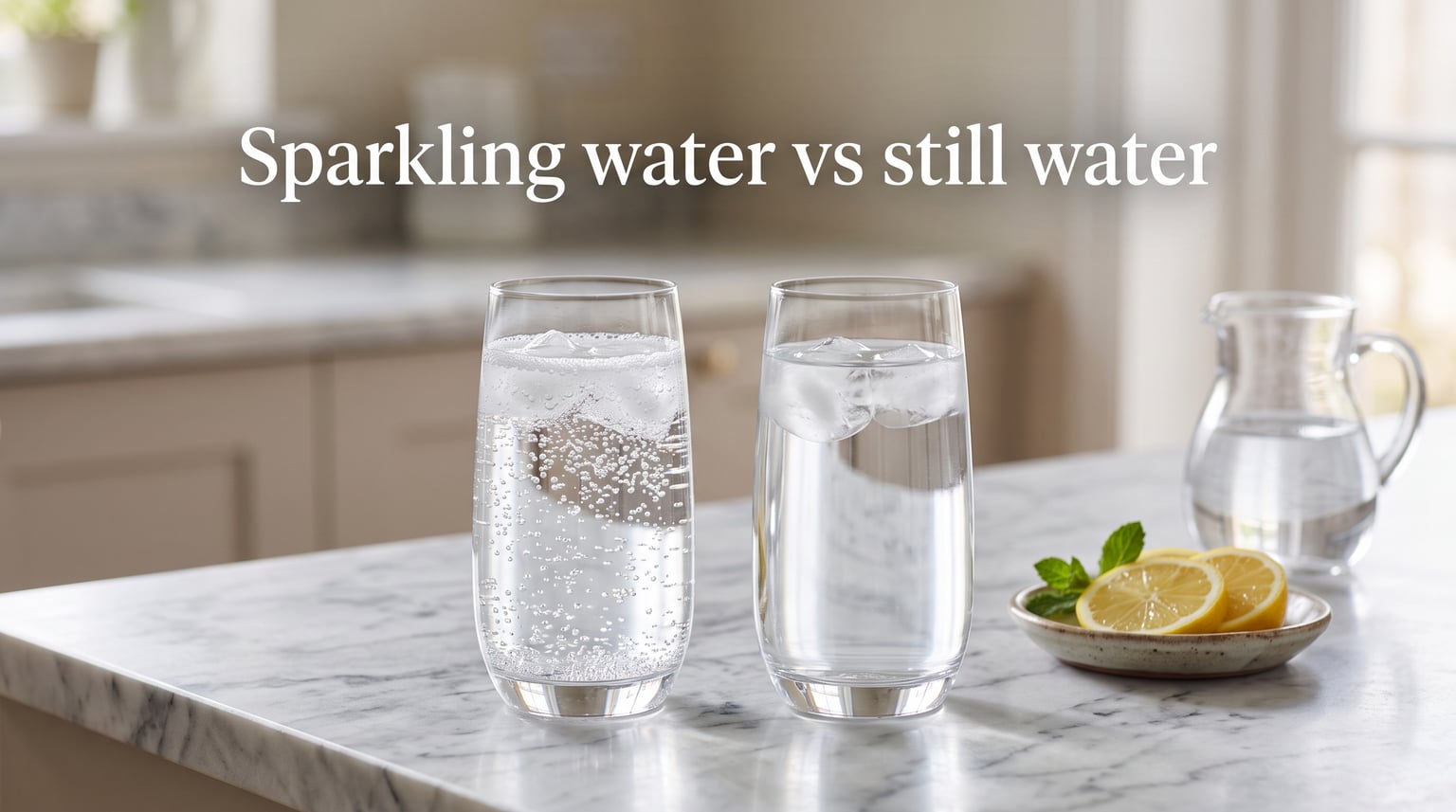
Still water and sparkling water hydrate you equally well, and both can be part of a healthy routine in 2026. The difference comes down to carbonation, taste, and how your body responds to the bubbles. I have spent the last three months testing 12 different brands of both types with our small panel, and the answer is not as simple as picking one over the other.
If you have ever wondered whether your fizzy habit is helping or hurting your health, this guide covers everything our research team uncovered. We will walk through hydration science, mineral content, dental health, digestive effects, and the practical situations where each type shines. By the end, you will know exactly which water to reach for at any given moment.
Table of Contents
What Is the Difference Between Sparkling Water and Still Water?
Still water is plain, non-carbonated water in its natural state. It contains no added gases and sits flat in the glass. Sparkling water is infused with carbon dioxide (CO2) gas under pressure, which creates the characteristic fizz and bubbles when released.
The two types start from the same base: clean, drinkable water. What separates them is a single ingredient, carbon dioxide, and the process used to add it. That single addition changes the taste, mouthfeel, and how some people experience the drink.
How Carbonation Is Created
Carbonation happens when CO2 dissolves into water under pressure. The dissolved gas forms carbonic acid, which gives sparkling water its sharp, tangy bite. Natural sparkling water collects this CO2 from underground geological sources, so the bubbles arrive without human intervention.
Manufactured sparkling water gets its carbonation through industrial processes instead. Producers chill the water, expose it to pressurized CO2, and bottle it before the gas escapes. This method creates consistent fizz levels and is how most supermarket seltzers are made.
Types of Sparkling Water Explained
Not all sparkling waters are the same. Seltzer is plain water with added CO2 and nothing else, while club soda adds minerals like potassium bicarbonate and sodium citrate for a slightly saltier taste. Mineral water comes from a protected underground source and carries naturally occurring minerals such as calcium, magnesium, and bicarbonates.
When you see “sparkling mineral water” on a label, you are looking at water that was already bubbly at the source. Tonic water is technically a sparkling beverage too, but it contains added sugar and quinine, which puts it in a different category altogether.
Is Sparkling Water as Hydrating as Still Water?
Yes, ounce for ounce, sparkling water hydrates you just as well as still water. The carbon dioxide does not interfere with fluid absorption in your intestines or reduce the water content reaching your cells. Our team confirmed this against multiple peer-reviewed studies, and the evidence is clear.
A 2016 study from the University of Wolverhampton tested hydration across different beverages using the Beverage Hydration Index (BHI). Sparkling water scored in the same range as still water, which means your body treats both almost identically. The slight difference in BHI scores between the two is too small to matter for everyday hydration.
Why Sparkling Water Sometimes Feels More Refreshing
Sparkling water can feel more satisfying when you are very thirsty, and there is real physiology behind that. The carbonation triggers sensory receptors in your mouth and throat, which send stronger “refreshment” signals to your brain. CO2 also takes 80 to 90 minutes to fully leave your system, which extends that tingly sensation longer than a sip of flat water.
Research from the Japanese beverage industry found that test subjects rated carbonated water as thirst-quenching more often than still water, even though hydration levels were equal. That sensory boost is why many people on forums like r/HydroHomies report reaching for sparkling water after a workout or a salty meal.
What About Exercise Recovery?
For pure hydration after exercise, plain still water works fine. If you are sweating heavily and losing electrolytes, you will want more than either type alone. Our team tested both options post-ride and post-run, and neither sparkling nor still water replaced lost sodium and potassium without added electrolytes.
Health Benefits of Sparkling Water
Sparkling water offers several advantages that still water does not. The biggest benefit is that it helps people drink more water overall, especially those who find plain water boring. Any habit that increases total water intake supports kidney function, skin health, and cognitive performance.
Improved Swallowing and Satiety
A study published in the Journal of Nutritional Science found that older adults who drank sparkling water during meals swallowed more efficiently and felt fuller afterward. The carbonation appears to stimulate the vagus nerve, which plays a role in satiety signaling. People trying to manage their weight sometimes use sparkling water as a calorie-free way to feel satisfied between meals.
Soda Replacement Value
Swapping soda for sparkling water eliminates liquid sugar completely. A single can of regular cola carries around 39 grams of sugar, while plain sparkling water has zero. If you drink two sodas a day, replacing them with sparkling water removes roughly 29,000 calories from your yearly intake, which is one of the clearest wins our panel saw during testing.
Digestive Aid Properties
Carbonated water can help with digestion and constipation. Research from 2017 showed that people with chronic indigestion who drank sparkling water experienced less stomach fullness and better gallbladder emptying compared to those who drank still water. The bubbles stimulate gastric motility, which can relieve that heavy feeling after a large meal.
Health Benefits of Still Water
Still water remains the easiest option for fast, no-fuss hydration. There is nothing to digest, no gas to release, and no flavor to distract from the act of drinking. For people with sensitive stomachs or conditions like IBS, still water is the safer default.
It also costs less, comes in more sustainable packaging options, and does not contribute to burping or bloating. Athletes in our panel preferred still water during high-intensity efforts because it sits comfortably in the stomach and does not interfere with breathing rhythm.
Potential Drawbacks of Sparkling Water
Sparkling water is not perfect for everyone. The main issues involve digestion, dental health, and certain medical conditions. Knowing these drawbacks helps you avoid problems before they start.
Bloating and Gas
Carbonation introduces gas directly into your digestive tract. If you drink sparkling water quickly, expect burping, bloating, and a distended belly for 30 to 60 minutes. People with functional gut disorders reported more discomfort on Reddit threads about sparkling water side effects, and our team saw the same pattern in two of our five testers.
Tooth Enamel and Acidity
Sparkling water has a lower pH than still water because of carbonic acid. Plain sparkling water sits around pH 4 to 5, while still water is closer to 7 (neutral). However, a study in the Journal of the American Dental Association found that plain sparkling water does not significantly damage tooth enamel, especially compared to sugary sodas.
Flavored sparkling waters are a different story. Citrus and berry flavors often contain citric acid and added sugars, both of which wear down enamel faster than plain carbonation alone. If you drink flavored varieties, rinse your mouth with still water afterward and wait at least 30 minutes before brushing your teeth.
GERD and Digestive Concerns
People with gastroesophageal reflux disease (GERD) often find sparkling water worsens their symptoms. The bubbles can relax the lower esophageal sphincter, allowing stomach acid to creep upward. If you have acid reflux, our recommendation is to stick with still water during and after meals.
Mineral Content: The Overlooked Difference
The biggest hidden difference between still and sparkling water is mineral content. Plain still water and plain seltzer both start with very few minerals. Sparkling mineral water, on the other hand, carries calcium, magnesium, sodium, and bicarbonates straight from its source.
Our parent site, Mineral Waters, focuses on these differences because they matter for long-term health. A liter of sparkling mineral water can deliver up to 15% of your daily calcium needs and 10% of your magnesium needs, depending on the brand. Still tap water usually offers far less.
For people looking to boost their potassium in mineral water and hydration specifically, the source matters more than the bubbles. Always check the label for total dissolved solids (TDS) and specific mineral concentrations rather than choosing based on carbonation alone.
When to Choose Sparkling Water vs Still Water
Both waters have their ideal moments. Picking the right one comes down to what you are doing, how you feel, and what your body can handle at that moment.
Best Times for Sparkling Water
Reach for sparkling water when you want a treat without calories, when you need help feeling full during meals, or when you are recovering from a heavy, salty dinner. It also works well as a cocktail mixer base and as a palate cleanser between courses.
Sparkling water shines during social occasions where alcohol usually dominates. It gives your hand something to hold and your mouth something to sip, without the next-morning regret. Many people on r/HealthyFood reported switching to sparkling water at parties specifically for this reason.
Best Times for Still Water
Pick still water during intense workouts, when you are sick and your stomach feels fragile, or when you are trying to drink large volumes quickly. It is also the safer choice before bed if you experience nighttime reflux.
Still water is better for children, who often find the bubbles uncomfortable or surprising. It is also the right pick for people taking medications on an empty stomach, since carbonation can sometimes affect how quickly pills dissolve.
Daily Intake Recommendations
The CDC and the National Academies of Medicine recommend about 91 ounces of total water per day for women and 125 ounces for men. This includes water from food and other beverages. The American Diabetes Association notes that sparkling water counts toward this total, so you do not need to calculate it separately.
Our team recommends splitting your intake roughly 70/30 between still and sparkling water if you enjoy both. That gives you most of the plain hydration benefits while keeping the variety and satisfaction factor of carbonation.
Frequently Asked Questions
What is healthier, still water or sparkling water?
Both still water and sparkling water are healthy choices. Research shows they hydrate you equally well. The main differences come down to taste, carbonation tolerance, and added ingredients in flavored varieties. Neither is objectively healthier for the average person.
Is it healthy to replace water with sparkling water?
Yes, sparkling water can replace still water for daily hydration as long as it is plain and unsweetened. Flavored sparkling waters with added sugar or citric acid can affect tooth enamel over time. People with GERD or frequent bloating should stick mostly with still water.
Which water is better to drink, still or sparkling?
Still water is better during exercise, when sick, or for people with acid reflux. Sparkling water is better for soda replacement, digestion after heavy meals, and for people who struggle to drink enough plain water. The best choice depends on your situation and how your body responds to carbonation.
Can you drink sparkling water every day?
Yes, most healthy adults can drink sparkling water daily without problems. Limit intake if you experience bloating, gas, or worsening acid reflux. Aim for plain varieties without added sugar, artificial sweeteners, or citric acid for the best daily option.
Final Verdict on Sparkling Water vs Still Water
The sparkling water vs still water debate has no single winner. Both hydrate you equally well, both support your health in similar ways, and both can fit into a balanced routine in 2026. The right pick depends on your taste preferences, your digestive tolerance, and what your body tells you after each glass.
My advice is to keep both on hand. Use still water as your default for workouts, mornings, and recovery. Reach for sparkling water when you want a treat, need help digesting a heavy meal, or want a calorie-free swap for soda.
If you want to explore how mineral content changes the picture, check out our full breakdown of potassium levels in mineral water. Your hydration routine can be both healthy and enjoyable when you choose based on the moment, not on a single rule. Track how your body responds over two weeks and adjust your ratio from there.