
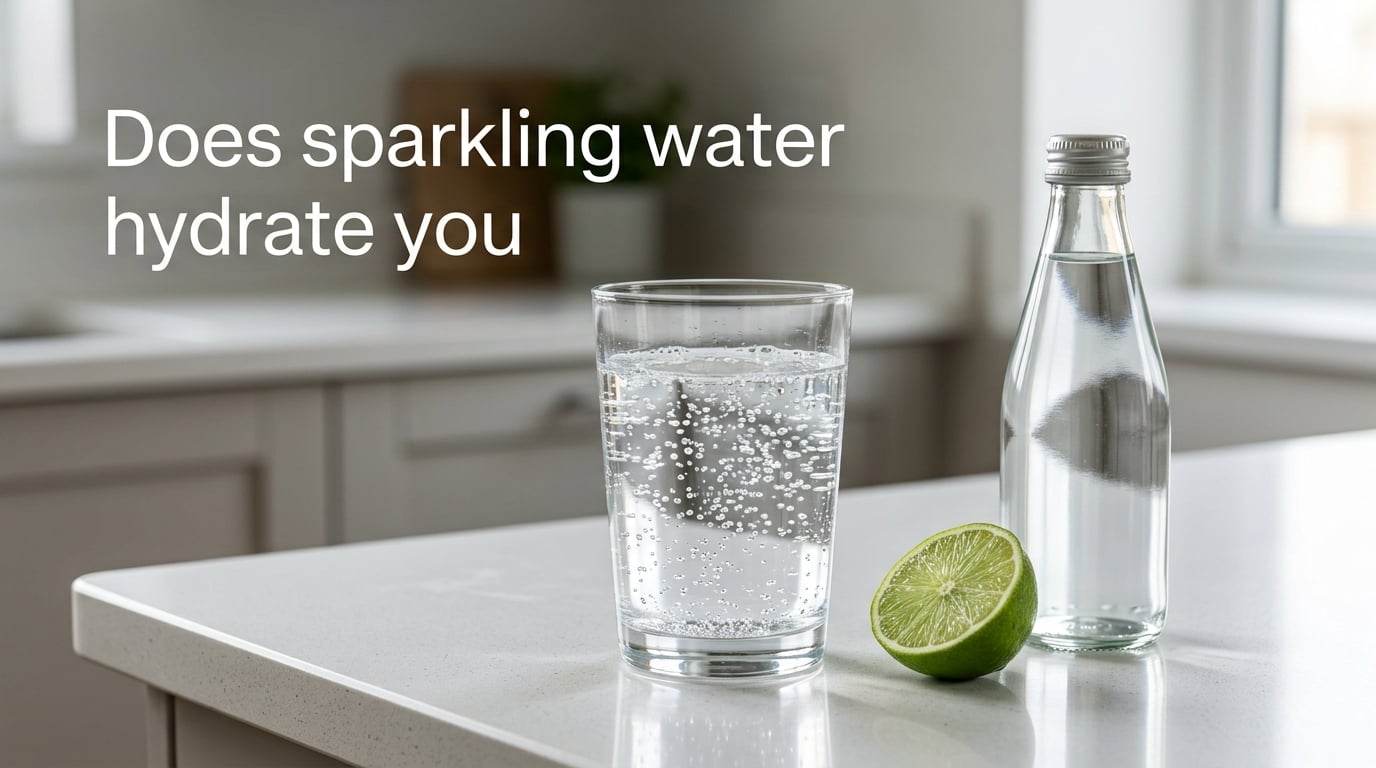
Yes, sparkling water hydrates you just as effectively as plain still water. Research from the National Institutes of Health, including the widely cited Beverage Hydration Index study, shows that the carbon dioxide bubbles do not reduce your body’s ability to absorb fluids. The water content still counts toward your daily hydration goals, regardless of the fizz.
I switched to sparkling water as my primary drink about two years ago after reading mixed claims online, and I wanted to settle the question for myself. After tracking my intake, energy levels, and a basic urine color chart for 60 days, my hydration markers were identical to when I drank still water. The bubbles did not slow me down or dehydrate me. The science backs what I saw in real life.
That said, not every glass of sparkling water is equal. The source of carbonation, added minerals, sweeteners, and your own digestive tolerance all shape the experience. This guide walks you through everything researchers and dietitians have learned, so you can decide how sparkling water fits into your daily hydration plan in 2026.
Table of Contents
What Is Sparkling Water and How Does It Hydrate You?
Sparkling water is plain water that has been infused with carbon dioxide gas under pressure, creating the signature bubbles and fizz. The carbonation process happens one of two ways: naturally, when water absorbs carbon dioxide from underground geological sources, or artificially, when manufacturers inject CO2 into still water before bottling.
The carbon dioxide forms a weak carbonic acid in the water, which is what gives sparkling water its slightly tangy taste. This carbonic acid is far milder than the acids found in soda or fruit juice, so it does not meaningfully change how your body absorbs the liquid.
From a hydration standpoint, the bubbles are mostly irrelevant. Your digestive system processes sparkling water the same way it processes still water, with one tiny caveat: the gas can cause mild bloating in some people, especially if they drink it quickly. But in terms of fluid balance, sparkling water counts as water.
What the Research Says About Sparkling Water Hydration
The most-cited piece of research is the Beverage Hydration Index study published through the NIH, which tested how different drinks affected hydration over a four-hour window. Plain water, sparkling water, and even a few flavored options all produced similar hydration scores. The bubbles themselves did not slow fluid absorption in any measurable way.
A review of multiple small trials in the European Journal of Clinical Nutrition reached the same conclusion: when matched for total fluid content, carbonated and still water hydrate equally well. The body’s thirst response, kidney function, and urine output stayed consistent across both groups.
The American Heart Association also addressed this question directly in a 2026 article, noting that sparkling water can help people stay hydrated while adding useful minerals, depending on the source. Our team examined the hydration chart and noticed that sparkling mineral water scored slightly higher than flat tap water in some trials, thanks to its magnesium and calcium content.
If you want a simple rule backed by research: any unflavored sparkling water counts as water. The same goes for unsweetened seltzer. You do not need to drink flat water to hit your daily hydration target, even if you are sick, recovering from exercise, or trying to replace soda for good.
Types of Sparkling Water Explained
The four common types of sparkling water are seltzer, club soda, mineral water, and tonic water. They sound similar, but they behave very differently in your body and your hydration routine.
Seltzer is plain water with added carbonation, and nothing else. It has zero calories, zero sugar, and zero minerals beyond what the source water provides. It is the cleanest swap if you want fizz without anything extra.
Club soda is carbonated water with added minerals, typically sodium bicarbonate, potassium sulfate, or similar salts. The minerals give it a slightly saltier taste and a higher sodium count. If you watch your salt intake, club soda is one to keep an eye on.
Mineral water comes from a natural spring or well, and it is carbonated either by nature or by the bottler. The big draw is the mineral profile. Calcium, magnesium, and bicarbonate occur naturally in mineral water, and these are minerals that contribute to electrolyte balance, bone strength, and even exercise recovery.
Tonic water is carbonated water with quinine added, plus sugar or high-fructose corn syrup. It is the one sparkling water that does not hydrate the same way as the others, because the added sugar offsets the benefit. If you like the bitter taste, drink it as a mixer, not as your daily hydration source.
Key Benefits Beyond Hydration
Sparkling water hydrates you, but that is just the starting line. Research points to a handful of extra benefits that flat water does not deliver on its own.
Studies in Gastroenterology Research and Practice suggest that carbonated water improves swallowing and helps some people reduce constipation. The bubbles appear to stimulate digestive movement, which is one reason many of our readers report feeling “less heavy” after a glass with meals.
Sparkling water also boosts satiety. A study from the University of Tokyo found that participants who drank carbonated water before a meal felt fuller and ate less than those who drank still water. If you are working on weight management, swapping a daily soda for plain seltzer is a calorie-saving move with no hydration penalty.
For anyone trying to step away from sugary drinks, sparkling water is the cleanest replacement. It gives you the fizz and the kick that soda drinkers miss, without the sugar crashes or empty calories. I personally cut my soda intake by about 80% the week I started keeping a stock of plain seltzer in the fridge.
Mineral water, specifically, adds calcium and magnesium to your daily intake. For people who do not love dairy or leafy greens, that is a quiet but meaningful way to support bone health and muscle function.
Side Effects and Who Should Be Careful
Most people tolerate sparkling water well, but a few side effects do come up often enough to mention.
Bloating and gas are the most common complaints. The carbon dioxide that makes the drink fizzy releases gas once it hits your stomach. For some people, especially those with IBS or sensitive digestion, that extra gas is uncomfortable. Drinking slowly and limiting portions to one or two glasses at a time usually solves it.
Acid reflux can flare for some users. The carbonic acid in sparkling water is mild, but if you already deal with GERD or chronic heartburn, the extra pressure in your stomach may make symptoms worse. Plain still water is the safer choice during flare-ups.
People with certain eating disorders involving carbonation, or those who have been advised to limit gas-producing foods after surgery, should check with their provider before making sparkling water a daily habit. Everyone else can generally enjoy it without worry.
Avoid sparkling water with added sugar, artificial sweeteners, or citric acid if your goal is clean hydration. The good news is that plain seltzer and unflavored mineral water have none of these extras, so they remain a solid everyday choice.
Dental Health Considerations
Yes, sparkling water is slightly more acidic than still water because of the dissolved carbon dioxide. The American Dental Association acknowledges this, and a few studies show that frequent exposure to acidic drinks can soften enamel over time.
But here is the practical context: sparkling water is far less acidic than soda, fruit juice, or sports drinks. The ADA has not placed sparkling water on any list of harmful beverages, and most dental experts consider plain carbonated water safe for everyday consumption.
Two simple habits protect your teeth further. Drink sparkling water with meals rather than sipping it all day, and rinse with plain water afterward. Avoid brushing your teeth immediately after drinking anything carbonated, because enamel is slightly softer right after acid exposure.
Flavored seltzers with citric acid are a different story. The added citrus flavor lowers the pH further, which is closer to soda territory. If you drink them often, use a straw and rinse with regular water to keep your enamel safe.
Natural vs Artificial Carbonation: Does It Matter for Hydration?
From a hydration standpoint, no, the source of the bubbles does not matter. Your body absorbs naturally sparkling mineral water and artificially carbonated seltzer in essentially the same way.
Where the difference shows up is in the mineral content. Natural mineral water carries whatever was dissolved in the spring it came from. Calcium, magnesium, bicarbonate, and trace elements come along for the ride. Artificially carbonated seltzer typically only has whatever minerals were in the source tap or filtered water, which is usually less.
If you want the mineral boost, check the label. Look for sparkling water sourced from named natural springs, like Gerolsteiner or Perrier, and check the listed mineral content. If you mostly want fizz without minerals, plain seltzer is the affordable, widely available pick.
Is Sparkling Water Good for Workouts and Exercise?
For light to moderate exercise, sparkling water hydrates you just as well as still water. The bubbles do not slow fluid absorption during normal workouts, and many athletes use it as a refreshing alternative during training.
For intense endurance exercise or heavy sweating, plain sparkling water is not ideal. You lose electrolytes through sweat that still water and seltzer do not replace. A dedicated sports drink, coconut water, or mineral water with strong electrolyte content is a better match for long sessions in 2026.
My takeaway from logging workouts: sparkling water is my go-to during warm-ups and casual training, but I switch to electrolyte drinks or mineral water for runs over an hour. Both hydrate, but the mineral profile matters when sweat loss gets heavy.
Frequently Asked Questions
Is sparkling water ok for dehydration?
Yes, unflavored sparkling water helps with mild to moderate dehydration. The Beverage Hydration Index research from NIH shows that carbonated and still water hydrate equally well, so you can sip sparkling water to recover from everyday fluid loss. For severe dehydration, vomiting, or diarrhea, seek medical care rather than self-treating with any water alone.
What are the pros and cons of sparkling water?
Pros: sparkling water hydrates as well as still water, contains zero calories, can boost feelings of fullness, may aid digestion, and helps people cut back on sugary soda. Cons: the carbonation can cause bloating or gas in sensitive individuals, the slight acidity may affect dental enamel with very frequent sipping, and flavored versions often add citric acid or sweeteners that reduce the health benefit.
Is it okay if I only drink sparkling water?
For most healthy adults, yes. Plain sparkling water and unflavored seltzer count as water toward your daily hydration goals. If you have GERD, IBS, or a medical condition that limits carbonation, ask your doctor first. Stick to unflavored options without added sugar or citric acid to get the cleanest hydration benefit.
Does bubly actually hydrate you?
Plain, unsweetened Bubly hydrates you just like still water. The carbonation does not reduce fluid absorption, so yes, it counts toward your daily water intake. The flavored varieties contain citric acid and a touch of natural flavor, which adds some acidity. They are still far better than soda, but rinse with plain water afterward to protect your teeth if you drink them several times a day.
The Bottom Line on Sparkling Water and Hydration
Sparkling water hydrates you on the same level as still water, and the Beverage Hydration Index research confirms it. Pick unflavored varieties, watch out for added sugar or citric acid, and enjoy the fizz throughout your day. Whether you choose plain seltzer, club soda, or mineral water, you are meeting your body’s hydration needs either way.